Referrals run on trust. I designed where it starts.
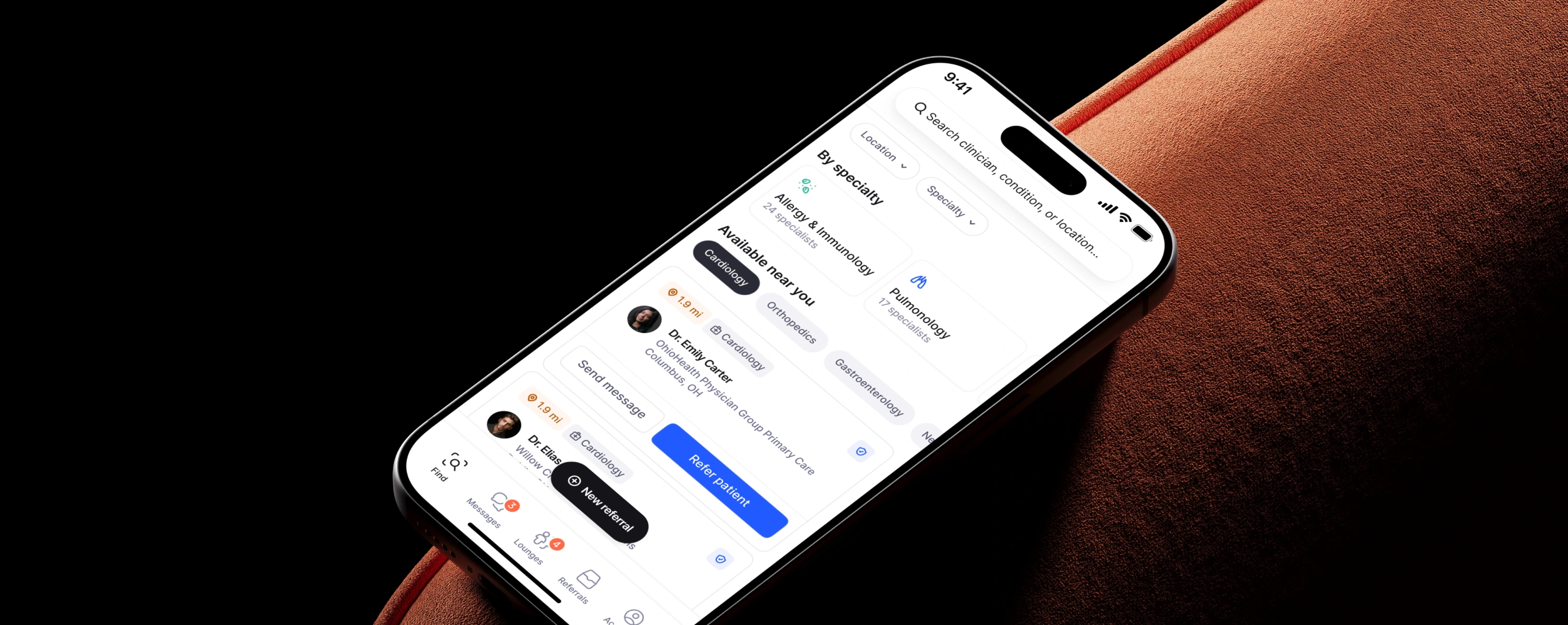
- Offcall
- Physician-founded clinician network. Referrals, messaging, and discoverable professional communities.
- Role
- Founding product designer. I owned all design and research.
- Platform
- iOS, Android
- Dates
- 2025 – present
- Credits
- Engineering: the Offcall engineering team
Without Offcall, a referral still looks like this: a clinician prints a list of specialists, circles four names, hands the paper to her patient, and says “here’s their phone number — you go figure it out.”
Design constraint
If this results in another call to my office, I will never use this.
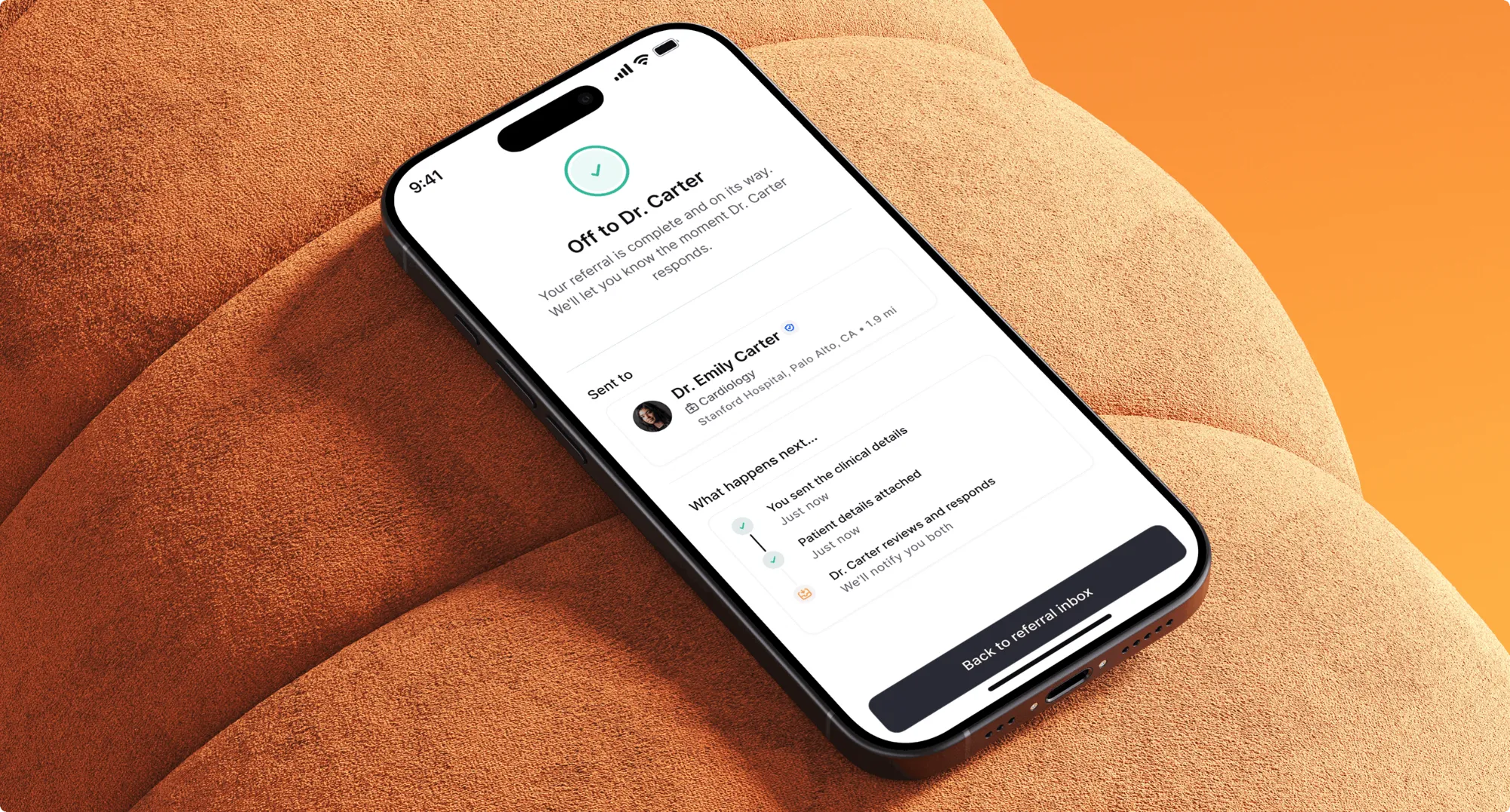
I judged the referral flow against that sentence.
Separate from the paper list, onboarding was a second problem. It asked for credentials and a bio before you could do anything.
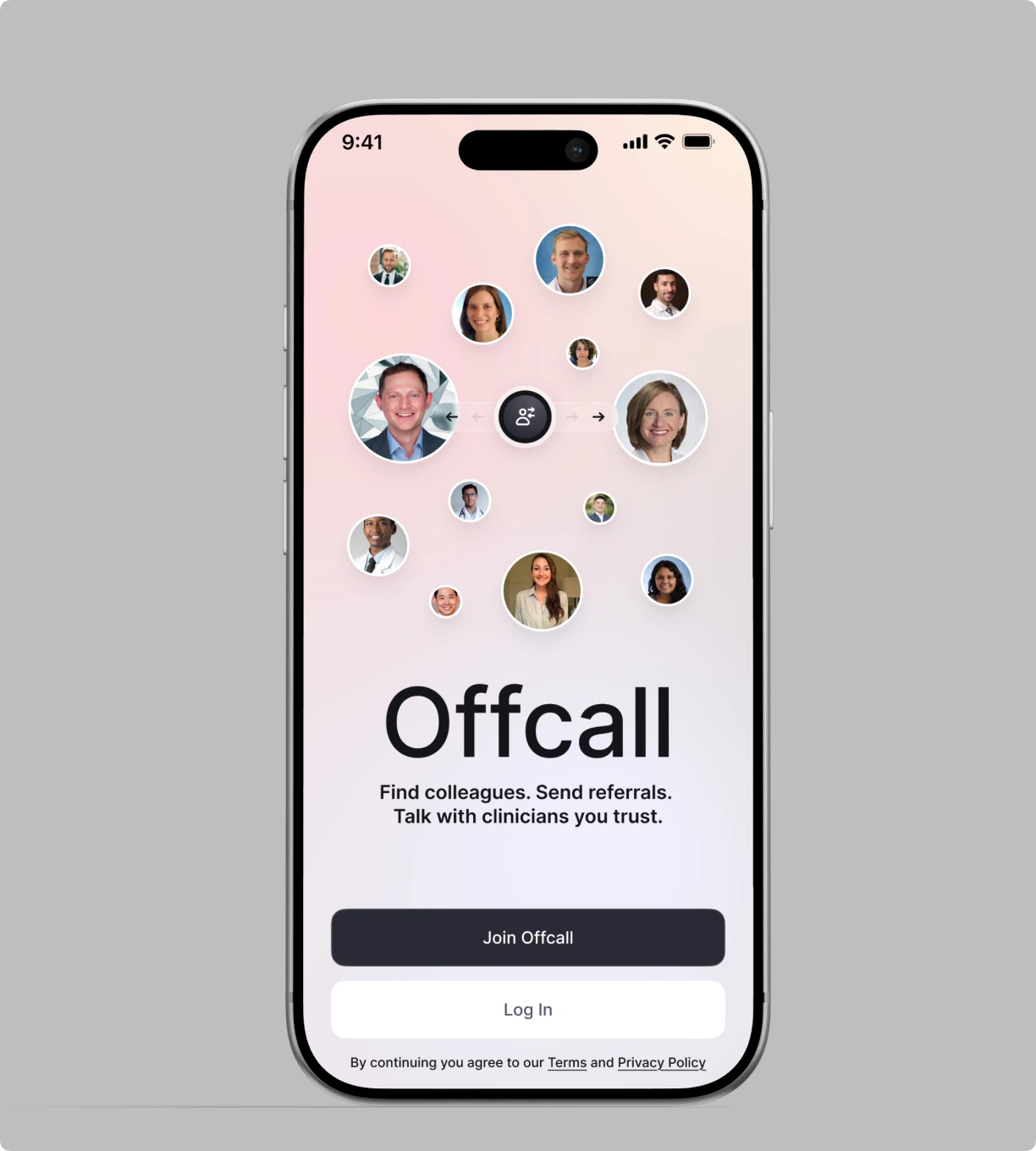
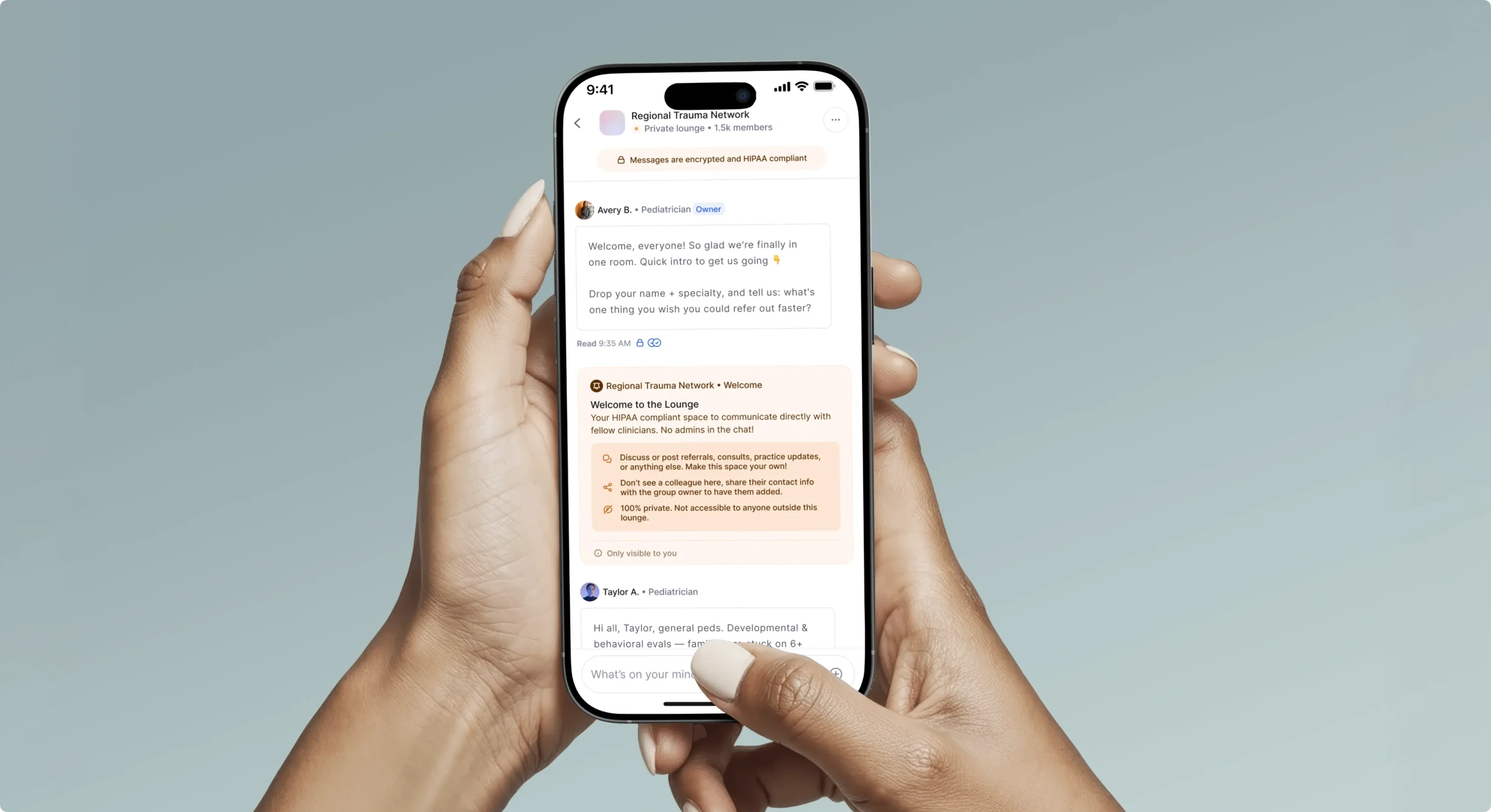
Clinicians recruited for referrals began using the app as a group chat. Those chats became Lounges, and Lounges became a way people arrived.
A physician shares a link with a newsletter list, and most who tap it aren’t there to refer anyone. Arrive to read a chat, get asked for a fax number, and you leave.
The pediatrician’s test applies at the front door too. Nothing should cost effort before it gives something back.
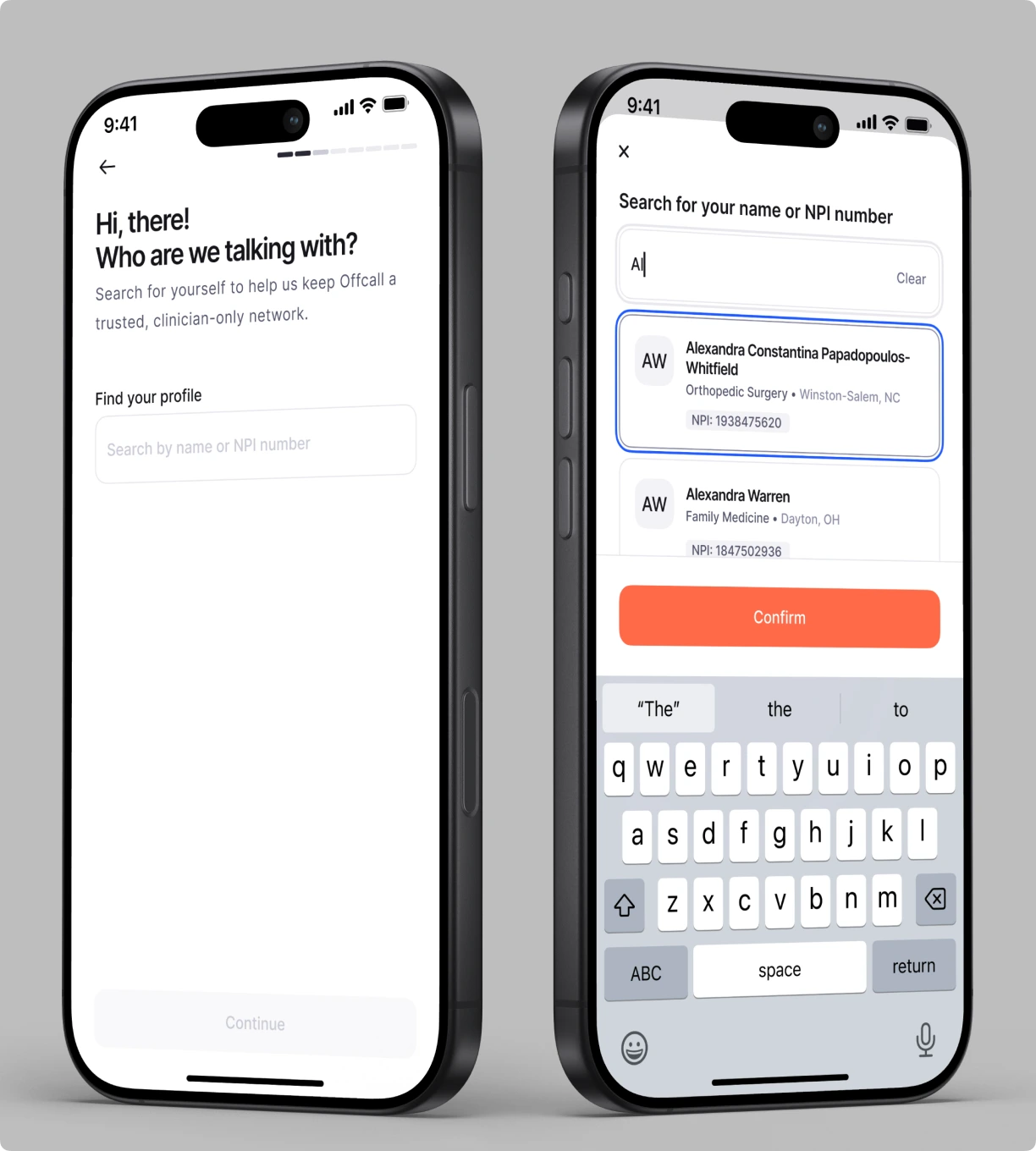
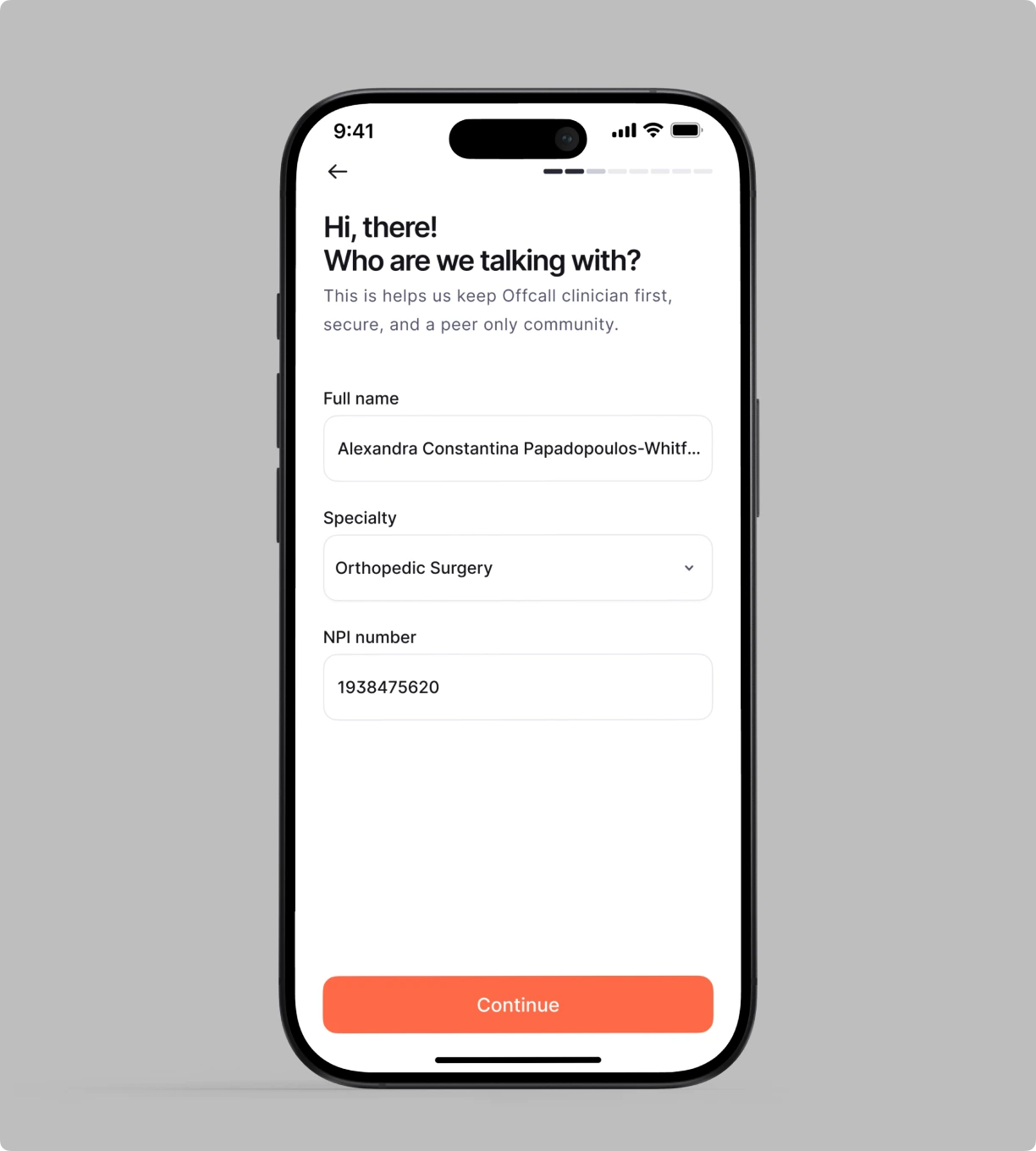
All of that information was needed eventually, but not on day one. Sign-up takes a name or an NPI and fills in the rest from the national registry.
However, the registry is wrong 40 to 60 percent of the time, so every prefilled field can be edited and the screen asks you to confirm it. The benefit is less typing, not perfect data.
I first proposed splitting onboarding in two, a thirty-second account and an optional referral setup. The team and I worked through it, and nobody thought it was right at that point. Verification was still manual, so there was a wait between signing up and getting in, however short the form was. Referrals also had to stay the center of the app. Finding someone good at something specific is what makes a referral work, so a profile needed practice details and specialties before it was useful.
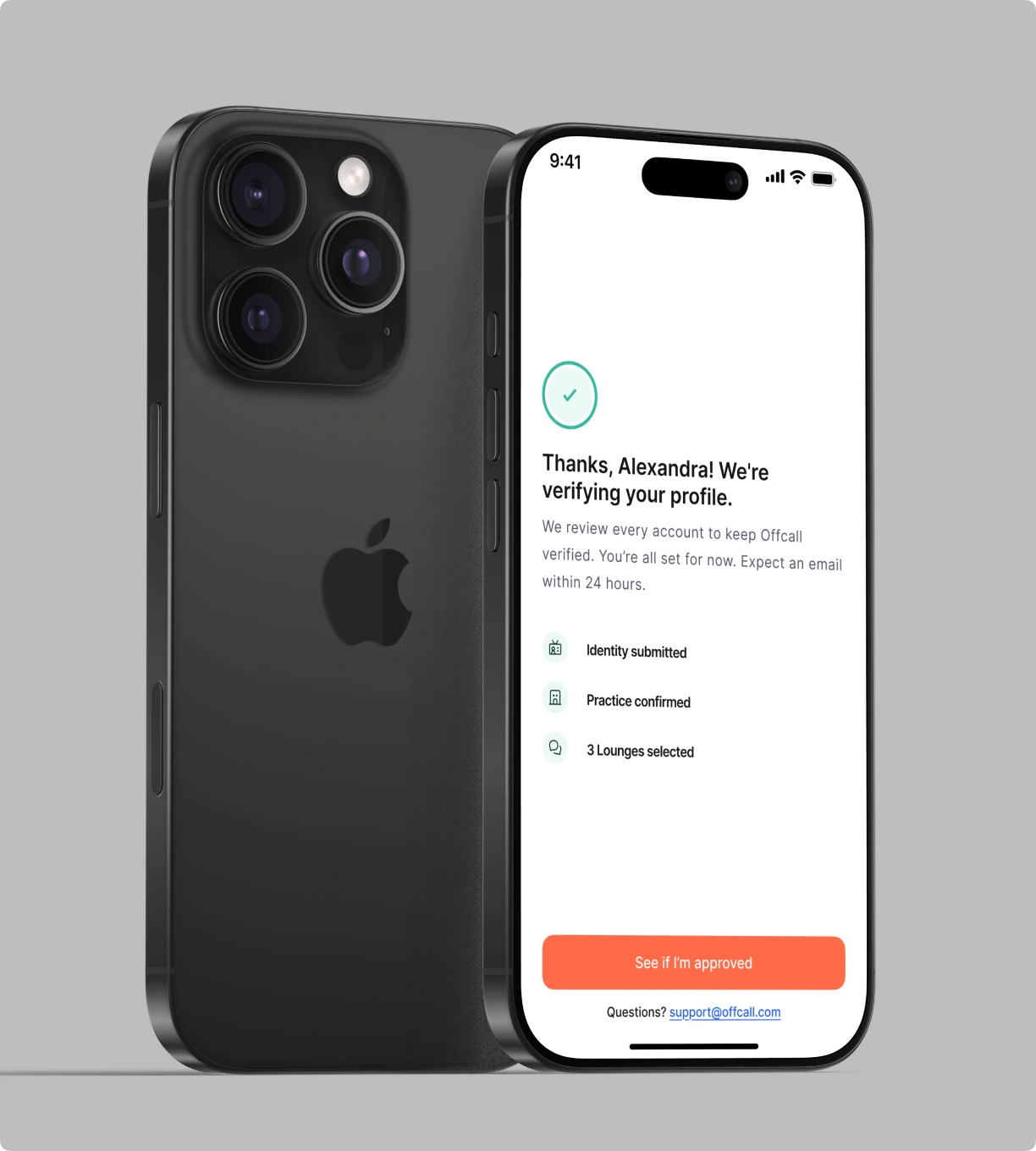
The split happened anyway. Onboarding became two flows, before verification and after it. Everyone goes through the second, but every step in it can be skipped and picked up later from the account page. Specialty comes from the registry at sign-up, so a skipped profile still has one, and niche specialties can be added afterwards.
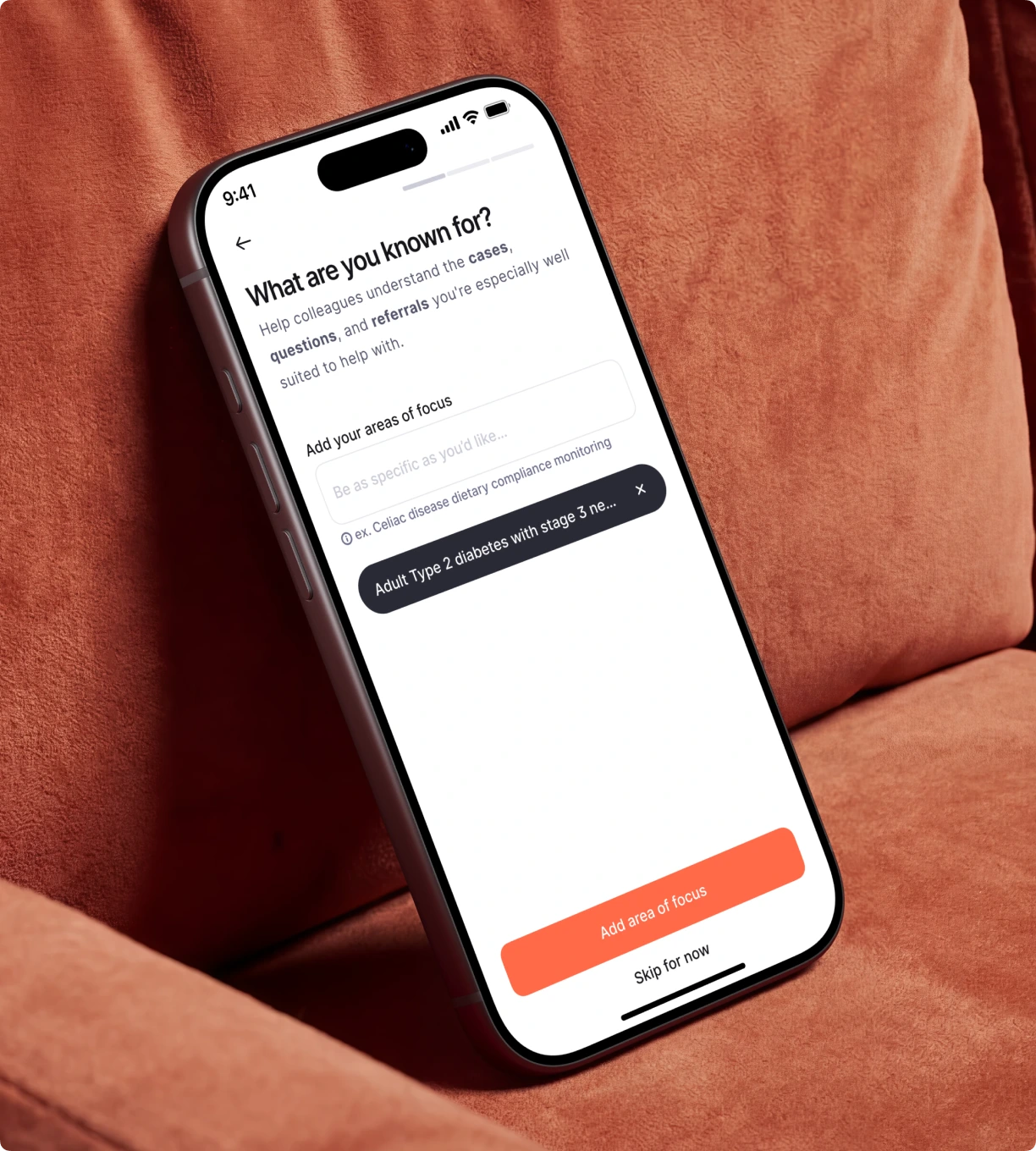
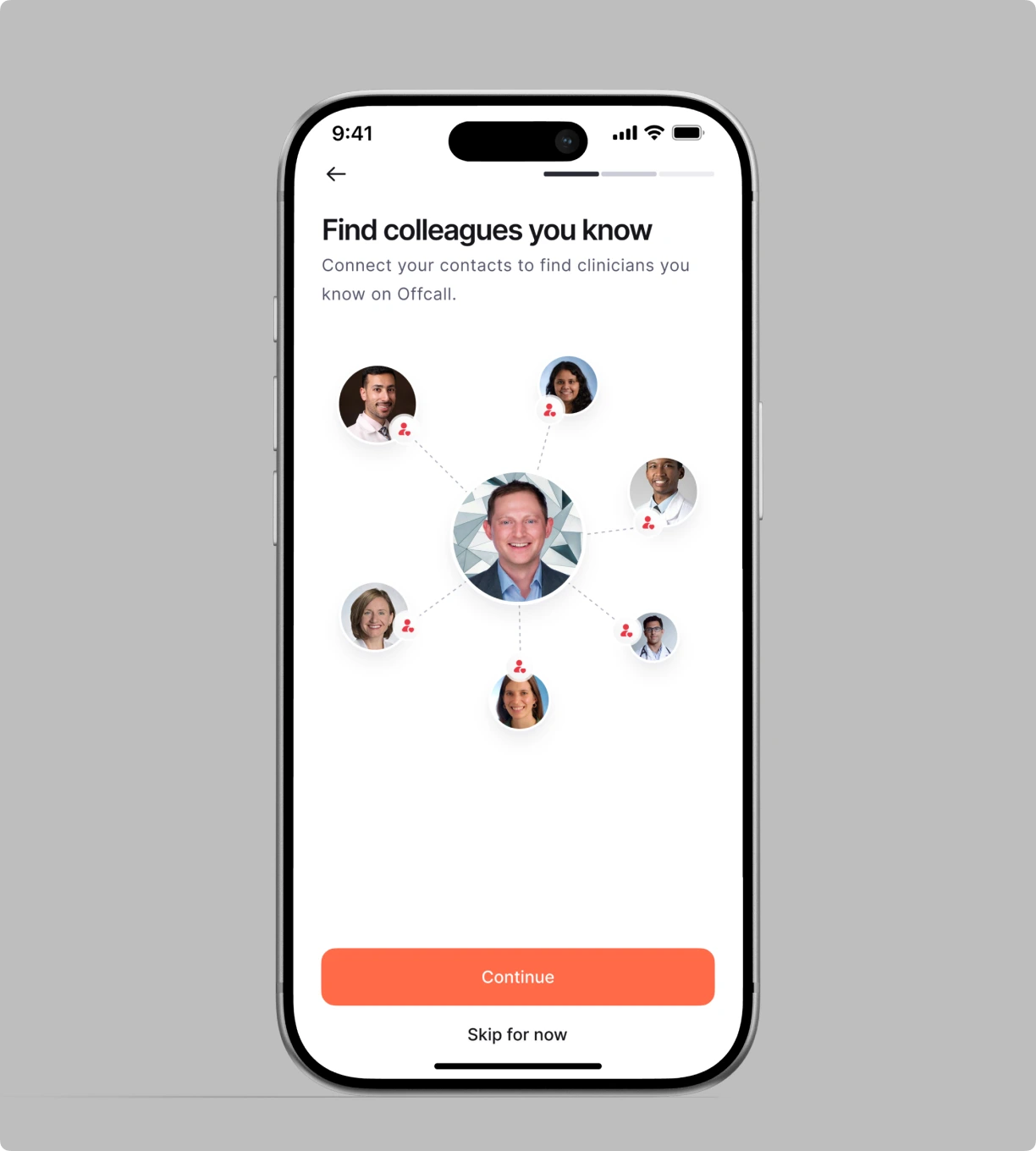
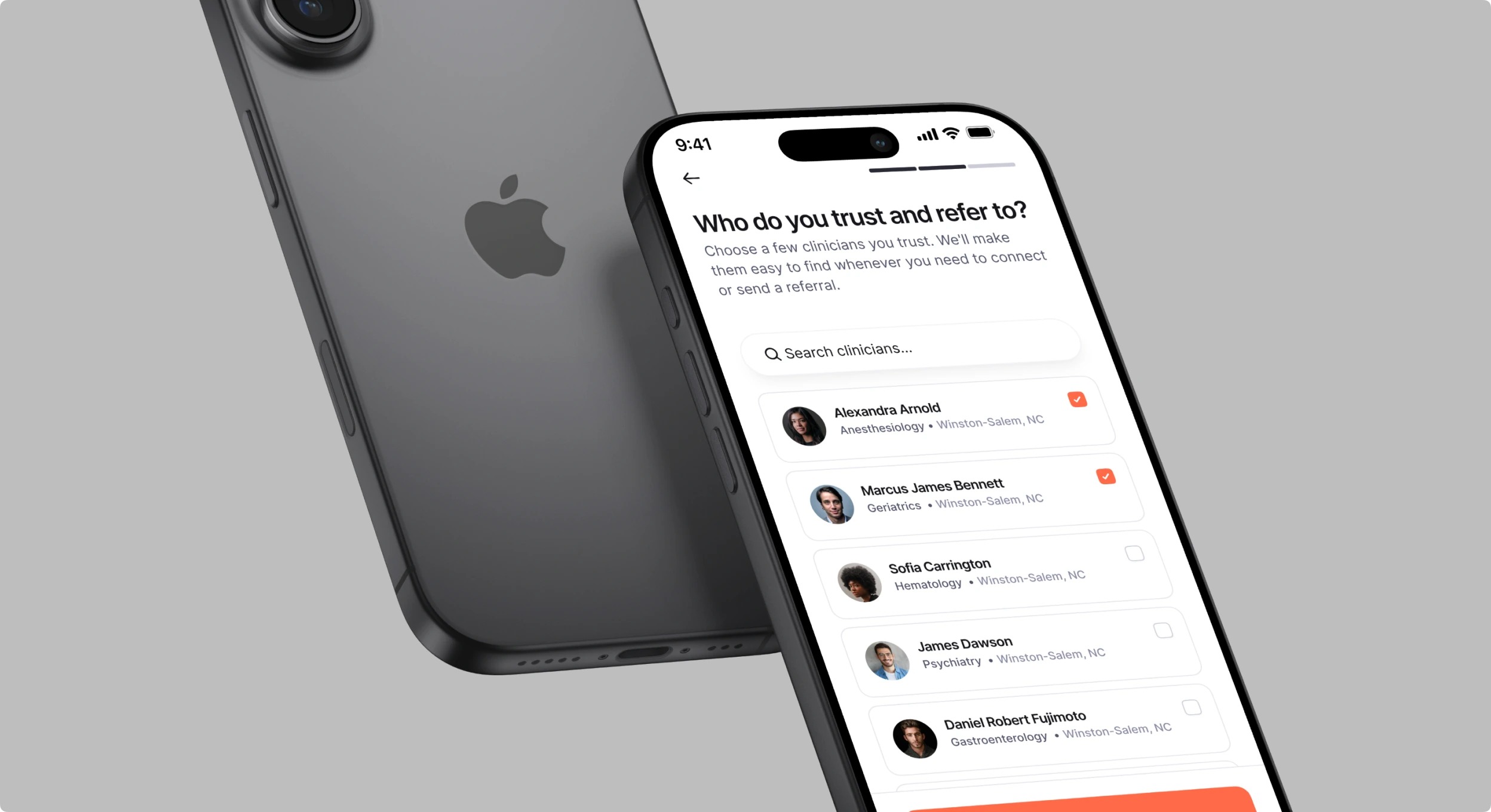
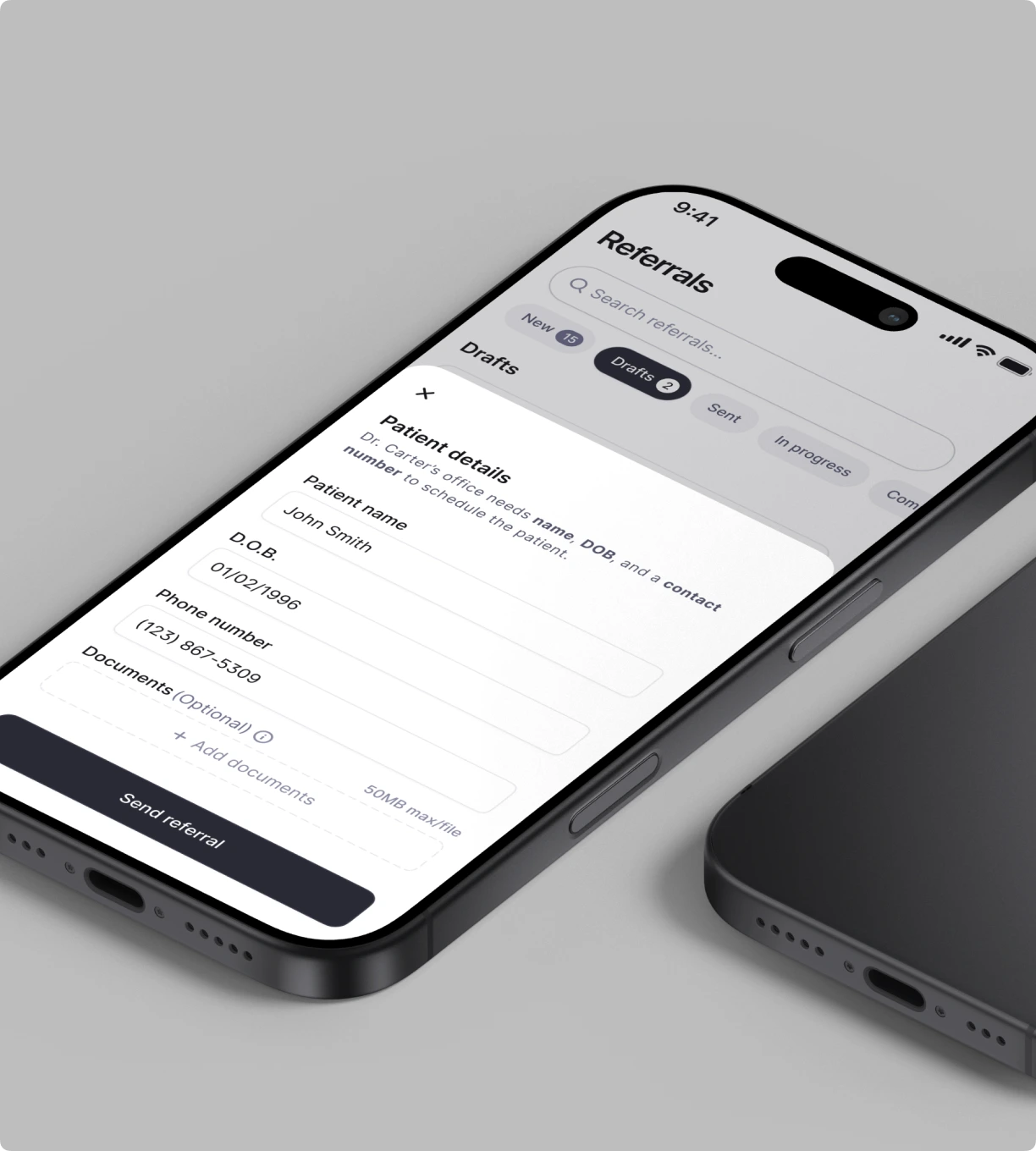
Referrals ask for things late too. Patient details are optional on mobile and required on the desktop tool staff use. A clinician can send a referral from a corridor and someone else fills in the rest later, which is why drafts exist.
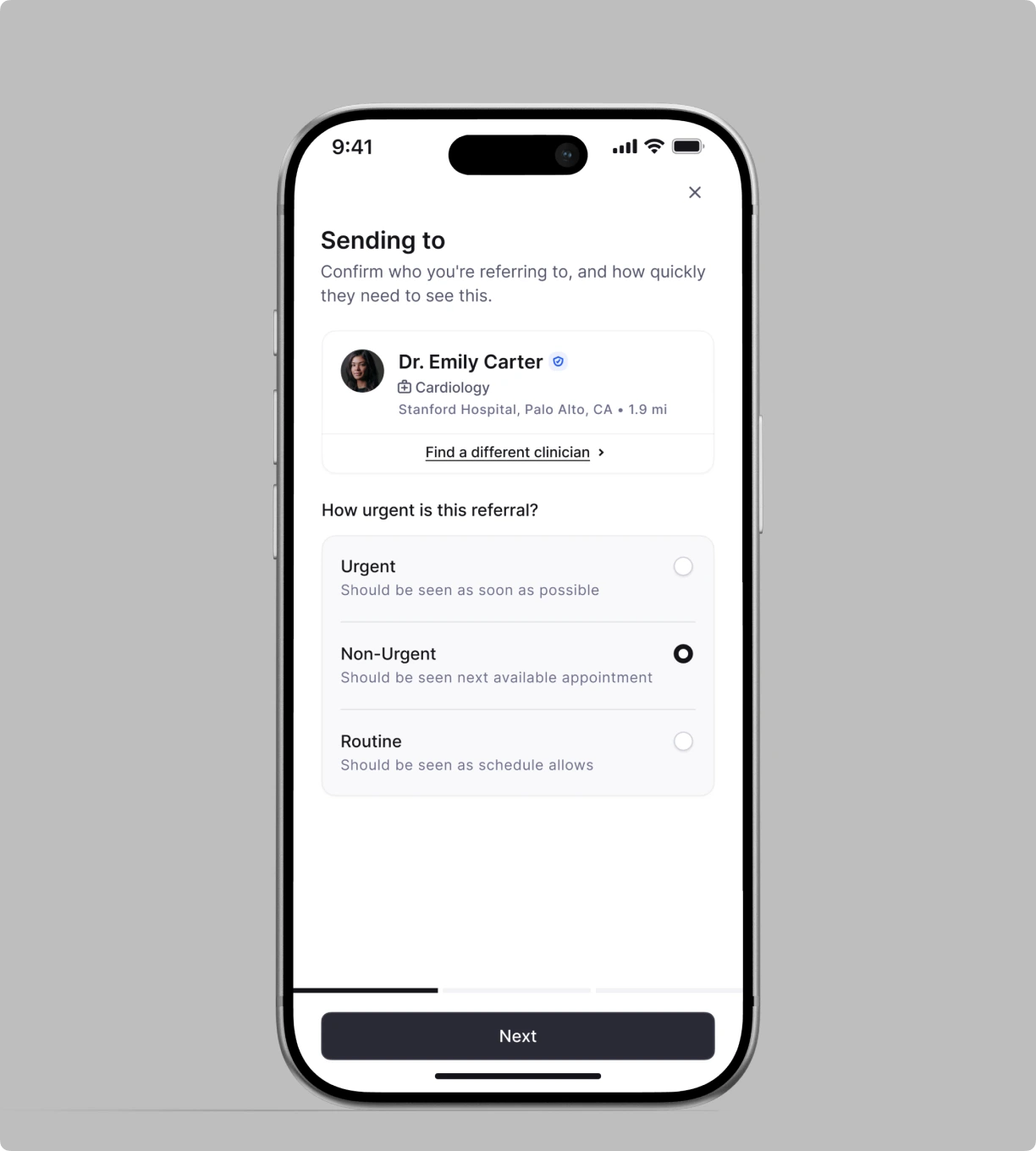
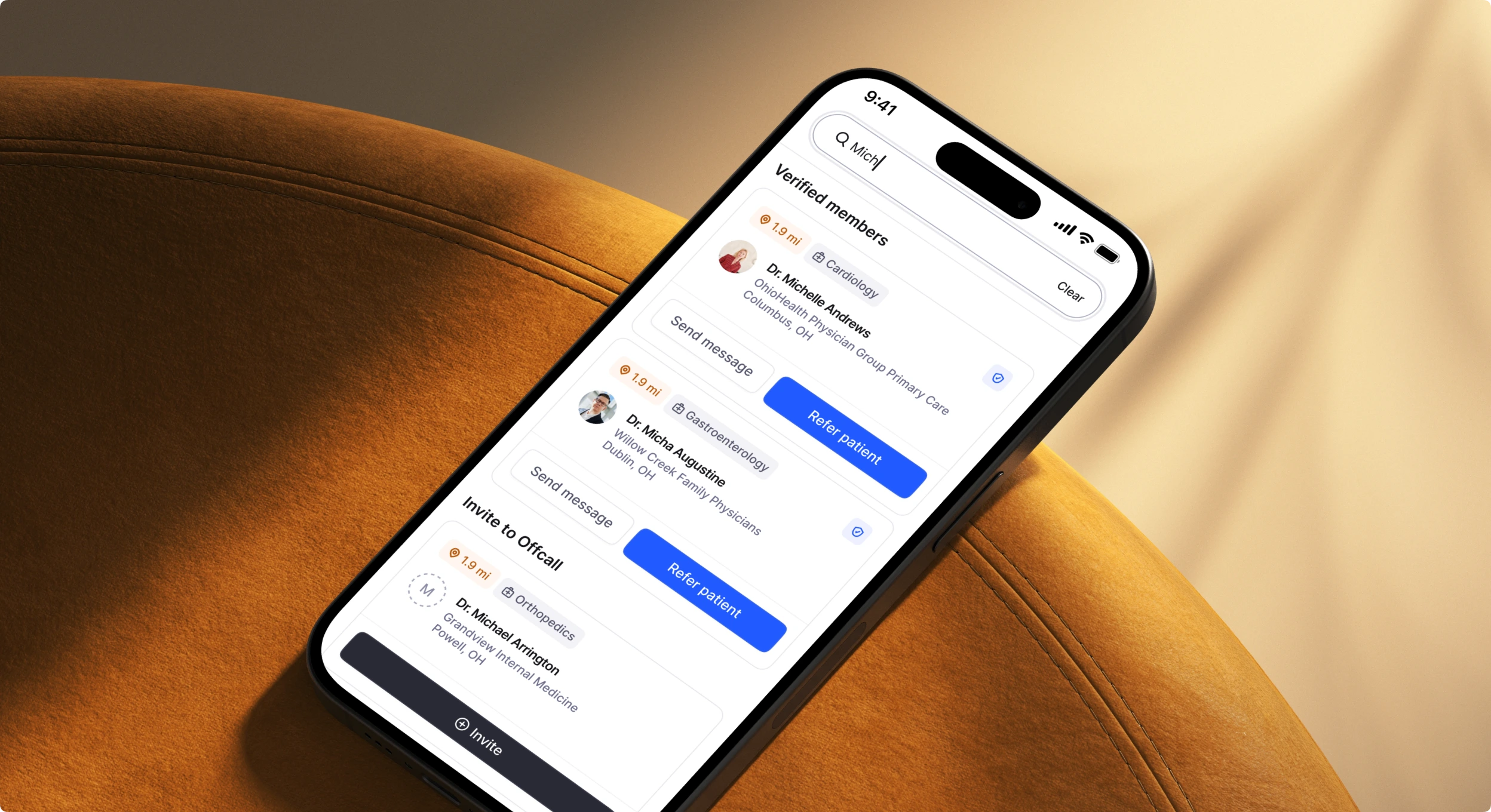
A referral needs a recipient who is on Offcall. Searching for someone who hasn’t joined shows them under Invite to Offcall, below the verified members. Inviting uses the iOS share sheet: you get a link and choose how to send it.
Lounges reached general release in late Summer 2026. They can be public, restricted or private, with invite links and deep links on both platforms. Messaging sits alongside them, so a clarifying question happens in the same place as the referral.
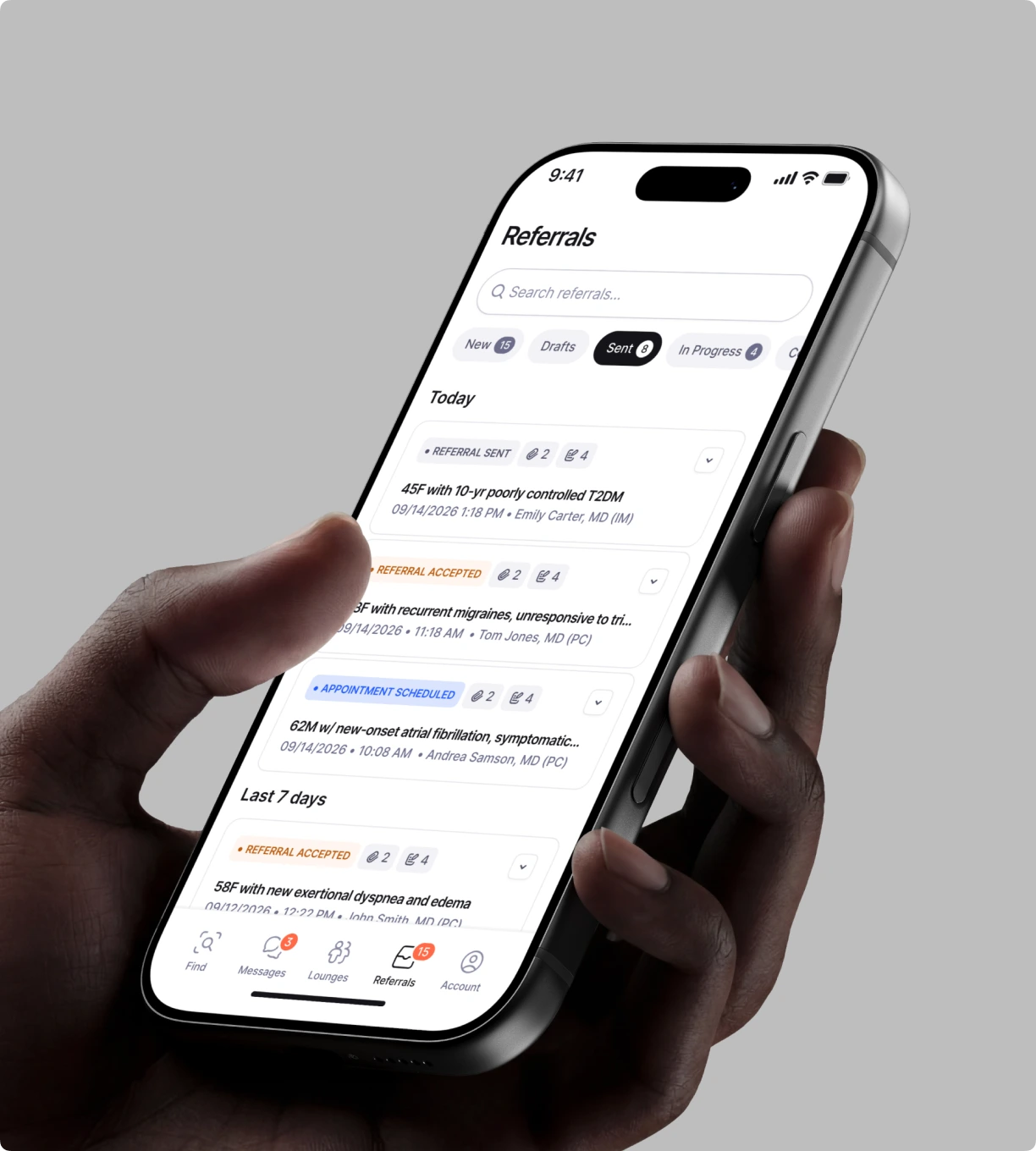
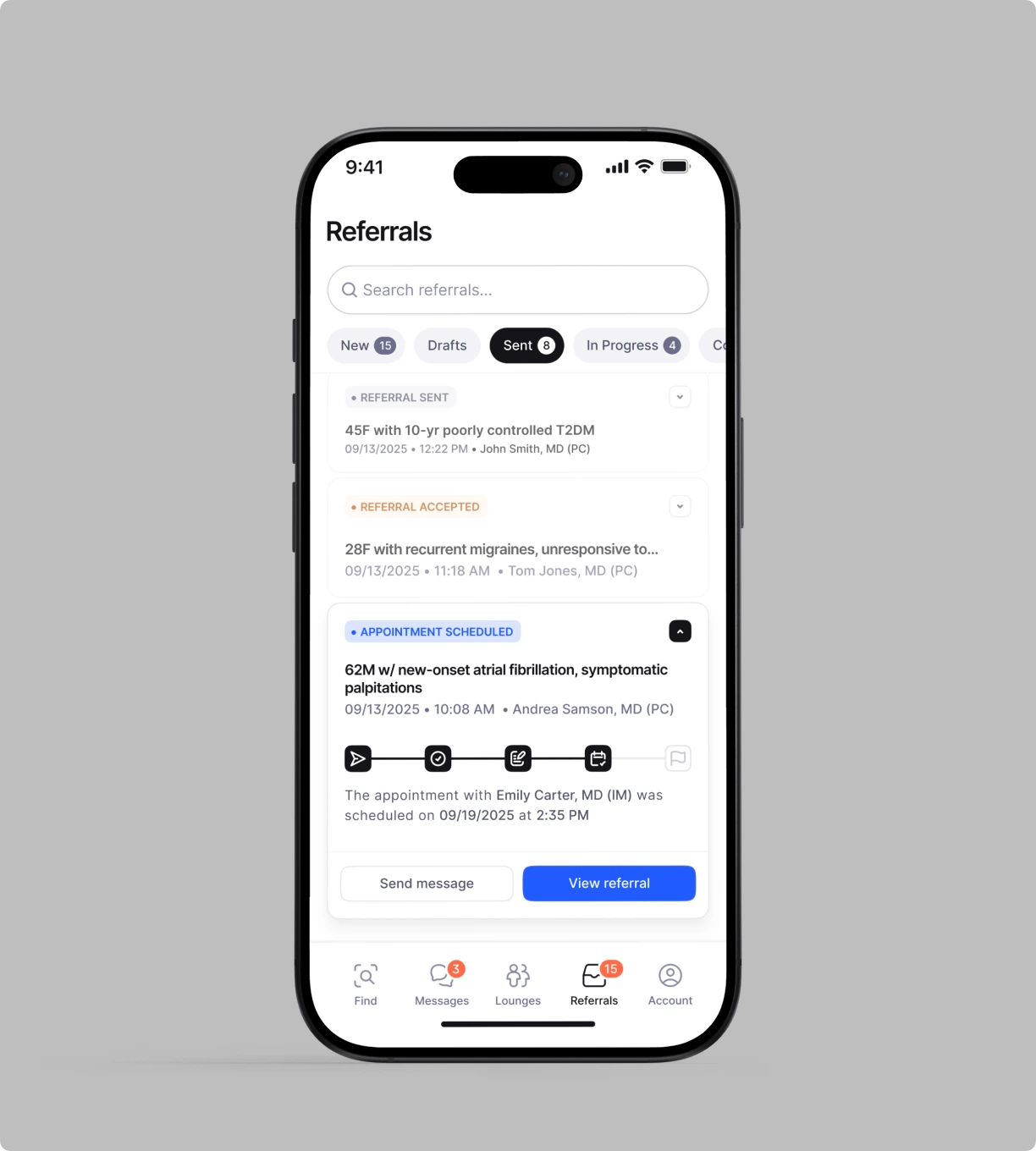
A referral now ends as a tracked status that the sender, the receiver and their staff can all see, rather than a circled name on paper. Nobody has to call anybody’s office.
This is a soft-launch pilot in one city, Columbus, Ohio, and it is early. Around 100 clinicians were on the platform. Over 30 days, we saw conversations that started in Lounges turn into referrals, the loop the app was built around.
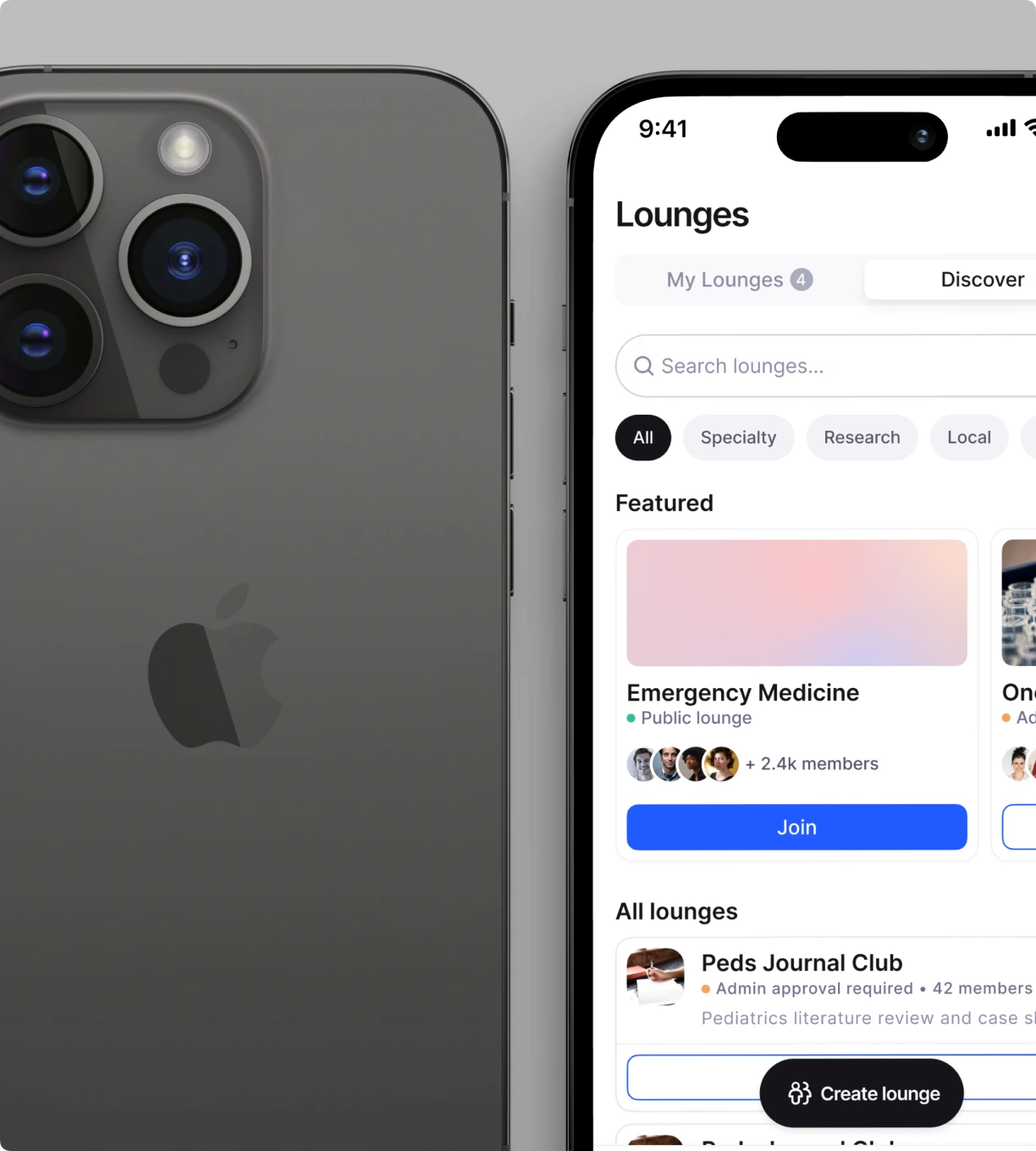
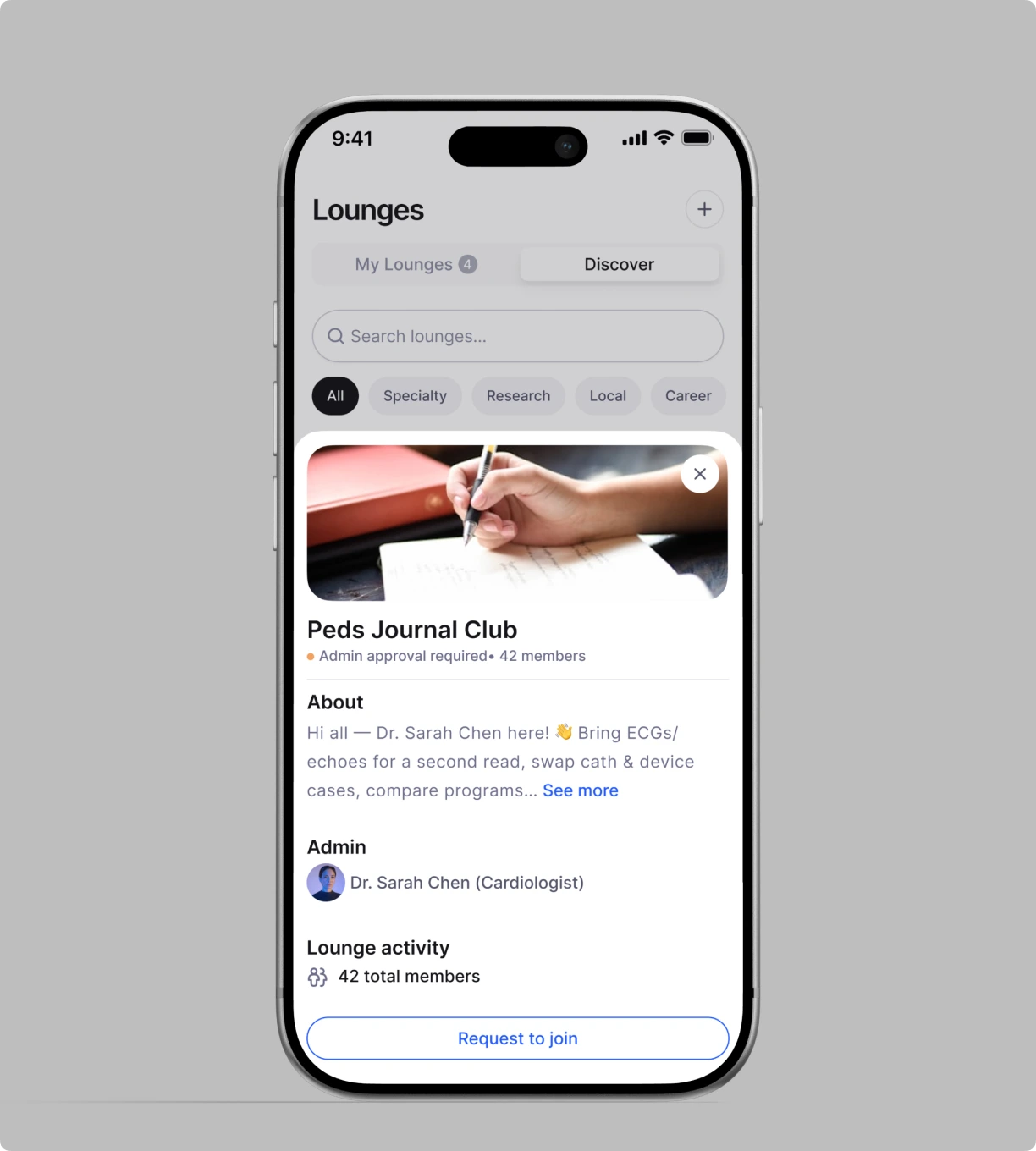
Onboarding, drafts and invites came down to one rule. Ask for each thing when someone needs it, not before.